21 Search results

For the term "Javelina".

Javelina in the Wash

javelina.jpgVerna and I were about to take the dogs out for a short walk at just about sundown this evening. When Verna opened up the patio door, the dogs began barking excitedly. Up on the bluff behind the RV drive, she saw some javelina walking toward the wash on the west side of the property. She restrained the dogs since javelina are known to attack, especially if they have young nearby.

I ran and got my camera and went out into the courtyard where I had a view of several of them in the wash. I snapped this photo of one of the bigger ones staring back at me. The yellow dish on the ground is where Verna puts water out for the little critters and birds. I was about ten yards away from this guy when I took the photo. Click to enlarge.

Living with Javelina

javelina.jpgAt dusk last evening, a herd of javelina meandered down the road in front of our house. There are seven adults and two offspring in this photo. There may have been one or two more.

Image: Herd of javelina – click on the image to enlarge.

We were in the office and would have missed seeing them were it not for Cabela’s loud barking from the great room. Verna called to me to bring the camera. We went out into the courtyard where I snapped several photos. The herd then moved on down the road as they foraged for their evening meal.

The following is excerpted from Arizona Game and Fish Department page “Living with Javelina.”

Though some people think javelina are a type of wild pig, they are actually members of the peccary family, a group of hoofed mammals originating from South America. Javelina are common in much of central and southern Arizona, including the outskirts of the Phoenix area, most of Tucson, and occasionally as far north as Flagstaff. Javelina form herds of two to more than 20 animals and rely on each other to defend territory, protect against predators, regulate temperature and interact socially. They use washes and areas with dense vegetation as travel corridors. Javelina are most active at night, but they may be active during the day when it is cold.

Javelina Sighting

javelina.jpg

I was on the patio earlier this evening and saw a javelina up in the wash behind the house. It disappeared behind the vegetation and I dismissed it as another distant sighting. Cabela started barking and carrying on in the front room. I went to see what was up and there were a family of six javelinas foraging across the road. I ran to get my camera and got this photo of the last one heading up the road. Click on the image to see the non-cropped version.

Halloween 2024

Verna has the Halloween decorations up in our little house for us to enjoy. Since we’re located on a dirt road in a semi-rural area with no street lighting and the potential for nocturnal critters like Javelina and Coyotes to be present, we get exactly zero trick-or-treaters. So, the decorations are for us alone.

The (clickable) image above came from the Bing® AI Image Generator with the Halloween lettering overlaid with Irfanview™. I suggested that the AI generate an image that was “dark and sinister,” and this was the result. I assume it figured out that Halloween was nigh and this seemed appropriate.

So, for all who celebrate “All Hallows Eve,” we wish you a happy time of it. And watch your six. Be safe in these “dark and sinister” times.

Coyote Sightings

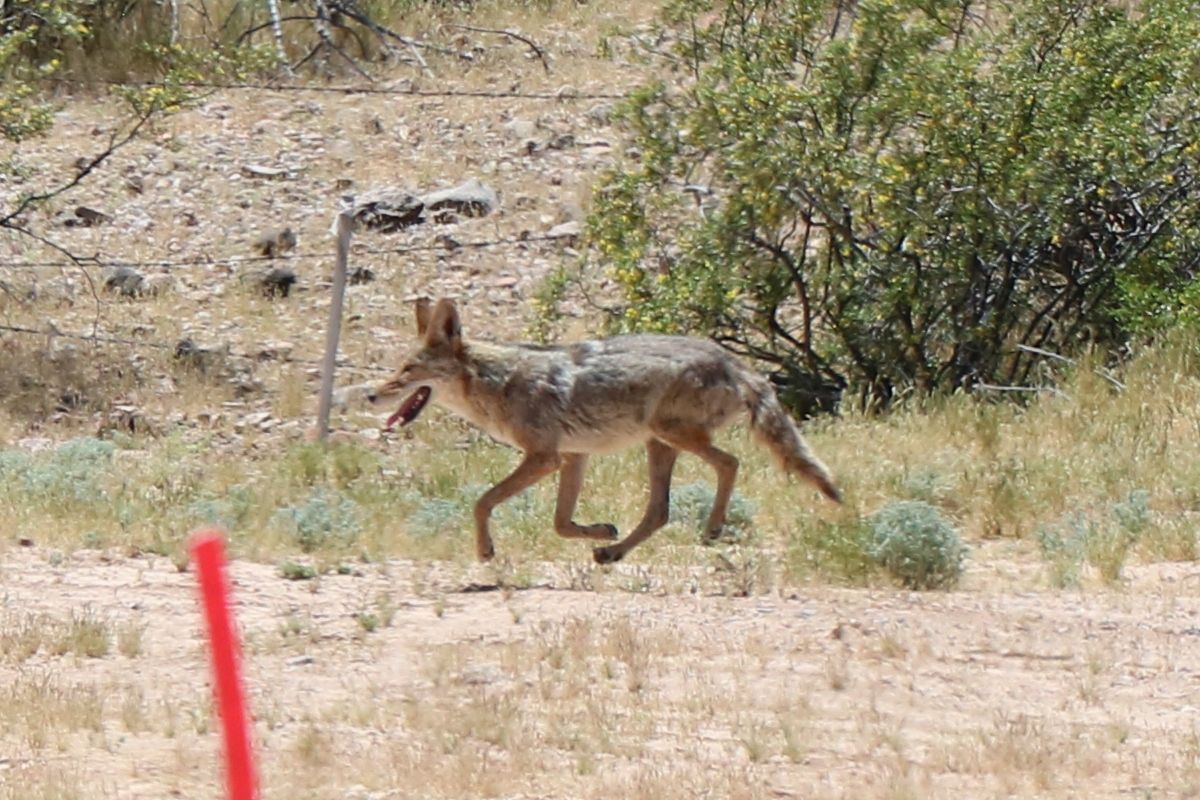
Above — Coyote image taken in April 2020 just northwest of our house. Click on the image to enlarge.

About a week ago when taking the dogs out for their morning walk, I observed a coyote walking across the neighbor’s driveway, about 50 to 70 yards west of our property line. The coyote didn’t seem to notice us at the time and the dogs didn’t notice the coyote. I mentally wrote the sighting off as a random indigenous desert animal just passing through the area. No harm, no foul. The dogs did their business and we went back inside the house.

Then, a couple of days later, I saw what appeared to be the same coyote walking across the same driveway at roughly the same spot at the same time as before. That made me think that the coyote might possibly have taken up the desert area west of here as it’s territory.

Even though there are houses in the area, much of the original natural desert remains which still provides habitat to the critters here including cottontail rabbits, jackrabbits, Gambel’s quail, antelope ground squirrels, roadrunners, javelina, mule deer and a myriad of other wildlife. The desert also has it’s predators such as hawks, rattlesnakes and coyotes. We have heard about, but have not yet seen, instances of bears and cougars around town.

So, this morning while walking the dogs, we saw the coyote to the west as before, only this time, we noticed each other. It stood and stared at me, still 50 yards away, and I watched it as I removed the dogs to the east in the opposite direction. The dogs still did not notice the coyote. We went back in the house after the morning business without any further wildlife encounters.

Later in the day today, we saw the coyote again hanging around the same area as before. It is still noticing us, but does not seem to be interested in approaching us. We will make updates to this post if anything further develops.

UPDATE — 12/05/2022: Apparently, the individual coyote has moved on since it has not been seen in a week’s time. It could still be out there, but we have not seen it since posting this item.

Desert Garbage Disposal

Desert Cottontail Rabbit

The photo above is a shot of one of our local desert cottontail rabbits (Sylvilagus audubonii) about to partake of some of the Brussels sprouts that didn’t make the cut to become part of today’s dinner. Verna will usually take unused portions of fresh veggies and toss them in the little wash behind the retention wall on the northwest side of our back yard. The rabbits don’t seem to mind that they’re getting second quality goods.

When we lived in California, we would dispose of this sort of ‘garbage’ in our compost bin. The compost worms would take care of recycling the kitchen waste. Now that we’re in the semi-rural Arizona desert, we do the recycling thing still with a compost bin, but most fruit and veggie scraps go up in the wash where a variety of critters devour them. We’ve seen everything including lizards, squirrels (several varieties), rabbits, jackrabbits, javelina and coyotes in the wash taking out the garbage, so to speak.

Read more about desert cottontail rabbits on Wikipedia. Click on the image to enlarge.