Gunventory

After the weekly trip to the shooting range, we set up shop on the patio (weather permitting) for cleaning and maintaining the firearms. Regardless of which guns belong to whom, Verna always cleans the revolvers (shines ’em up good) and I disassemble and clean up the pistols. She cleans up the shotgun barrels and chokes and I clean up the fore-end, breech bolt and receiver. Once every couple of months, I knock out the pins and clean and oil the trigger mechanisms. We each do the part we like and I think we make a good team.

071014shoot.jpgClockwise from the bottom:

  • Smith & Wesson 442 .38 special
  • Smith & Wesson 686 .357 magnum
  • Smith & Wesson 908s 9mm 8+1
  • Glock 26 9mm 10+1
  • Remington Express 870 20 ga. youth model 4+1
  • Remington Express 870 12 ga. 4+1
  • Ithaca 20 ga. single shot (had it for 41 years now)
  • Speed loader and pistol magazines in the center
  • The 9mm ammo bucket on the right

Click on the image for the big picture.

In the Garden Shop

happy-flowers.jpgWe went to get some home supplies today at the local home improvement center. Of course we stopped in the garden shop to look at the flowers. I took so many photos in there, that it was difficult to select which one was best to put on the weblog. It came down to these two; the top is a shot of some daisies in six-packs and the bottom is a hanging basket of petunias (I think).

Both of the pictures make us feel happy when we see them. With all the colorful flowers of many varieties, it was hard to believe that this is fall and soon it will be Halloween! Click on the thumbnail for a larger view.

Look In the Ammo Bucket

. . . to see these beautiful Winchester 9x19mm Luger Parabellum rounds. Parabellum is from an ancient Latin credo – “Si vis pacem, para bellum.” Translated, it means “if you seek peace, prepare for war.”

Verna took this artistic photo last weekend when we were doing gun maintenance after our weekly target practice. I use the big version for a computer background picture.

parabellum-rounds

Primordial Swamp

primordial-swamp.jpgLast summer when we visited the Petrified Forest, we saw an artist’s conception of the primordial swamp that existed over 225 million years ago in this now high desert plateau. The petrified and fragmented remains of those ancient trees can be seen throughout a large part of the park.

When we went to the Botanic Garden’s lake area last Saturday, I took this picture of what looked like that swamp picture. The only thing missing is supercrocs in the lake, oviraptor dinosaurs scurrying about and pterodons soaring overhead. Click the image to see the big picture.

Ruby Meadowhawk Dragonfly

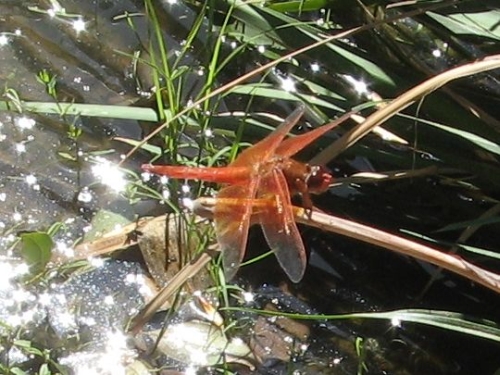
All the years that I have been in California, it was not until last weekend that I saw a red dragonfly. In fact, there were red dragonflies in abundance, around the lake at the South Coast Botanic Gardens. This is one of those infrequent occasions where I got an outstanding picture (Verna is the queen of artistic photos in our family).

ruby-meadowhawk.jpg

I did some research and found out that this is a Ruby Meadowhawk, a variety of the suborder Anistoptera (Dragonfly). This is an excerpt from the WikiPedia page on Dragonflies:

Dragonflies typically eat mosquitoes, midges and other small insects like flies, bees, and butterflies. They are usually found around lakes, ponds, streams, and wetlands because their larvae, known as “nymphs”, are aquatic. Dragonflies do not normally bite or sting humans (though they will bite in order to escape, for example, if grasped by the abdomen); in fact, they are valued as a predator that helps control the populations of harmful insects, such as mosquitoes. It is because of this that dragonflies are sometimes called “mosquito hawks.”