Arizona

Xeriscape Vegetation

Last week when we visited the Glendale Xeriscape Garden, I took this picture of a giant saguaro surrounded by a yucca (left), ocotillo (right) with an evergreen elm tree in the background. All of these are examples of low-water consumption vegetation. Xeriscape comes from combining the words landscape and xeros, the Greek word for “dry.”

The holes in the saguaro are usually burrowed out by flickers or woodpeckers but can be occupied by cactus wrens, elf owls and a variety of other desert birds. We really are enjoying learning about our desert environment. Click on the image to enlarge.

xeri-garden.jpg

One Year Ago

We traveled from California to our new Arizona home-in-progress on Labor Day weekend last year. Verna took this picture of the house when we arrived while the framing was in progress.

What a difference a year makes! Mouse over the picture to see our house as it appears today. We are truly blessed and fortunate to have been able to build our dream house.

A Nasty Bug

Our little dog, Cabela, flushed this nasty-looking fellow from behind the compost bin today. She was about to investigate further (and probably would have been stung) but I held her away from the scorpion while I administered a stomp that ended the threat. It was still twitching a bit when I took the photo. Click on the image to enlarge.

scorpion.jpg

Living with Javelina

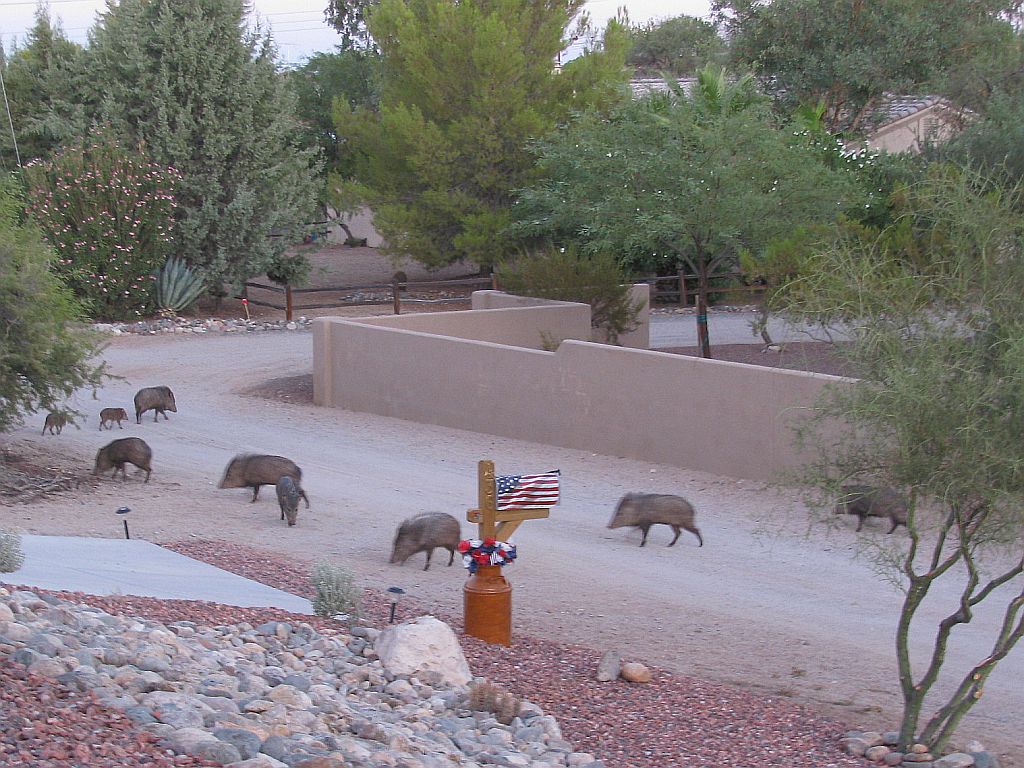
javelina.jpgAt dusk last evening, a herd of javelina meandered down the road in front of our house. There are seven adults and two offspring in this photo. There may have been one or two more.

Image: Herd of javelina – click on the image to enlarge.

We were in the office and would have missed seeing them were it not for Cabela’s loud barking from the great room. Verna called to me to bring the camera. We went out into the courtyard where I snapped several photos. The herd then moved on down the road as they foraged for their evening meal.

The following is excerpted from Arizona Game and Fish Department page “Living with Javelina.”

Though some people think javelina are a type of wild pig, they are actually members of the peccary family, a group of hoofed mammals originating from South America. Javelina are common in much of central and southern Arizona, including the outskirts of the Phoenix area, most of Tucson, and occasionally as far north as Flagstaff. Javelina form herds of two to more than 20 animals and rely on each other to defend territory, protect against predators, regulate temperature and interact socially. They use washes and areas with dense vegetation as travel corridors. Javelina are most active at night, but they may be active during the day when it is cold.

Kokopeli Wind Chime

koko-chime.jpg

I have several wind chimes and ornaments hanging in the mesquite tree next to the RV pull-thru. My brother, Fred, and sister-in-law, Sherry, brought this from Grand Canyon years ago and gave it to me. The Kokopeli figure and Native American decorations plus the colors are a perfect match for our beautiful new home. 🙂 Click on the image to enlarge.