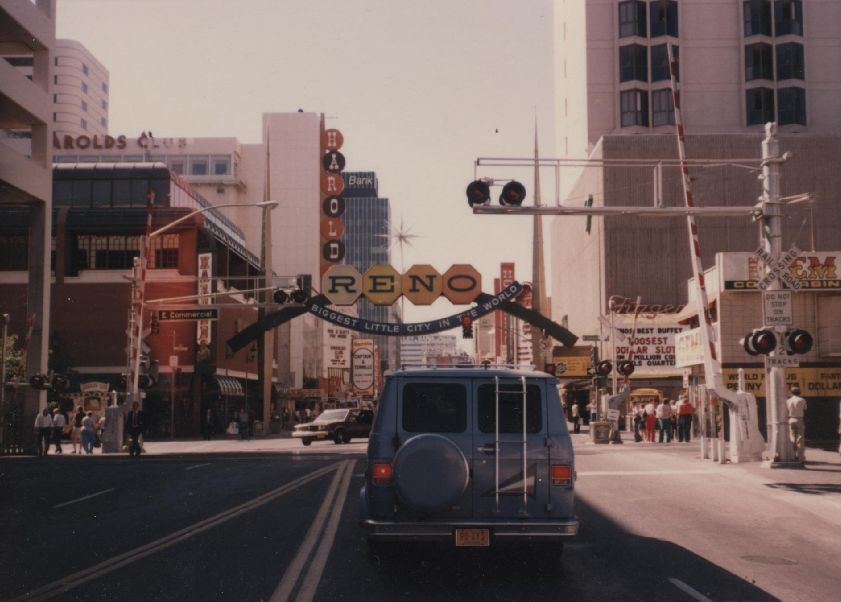
 After reading news accounts about the contribution of pigeon dung to the collapse of the I-35W bridge in Minneapolis, I was reminded about how pigeons similarly factored into the destruction of the famous “RENO – The Biggest little city in the world” sign that spans the entrance to the downtown gambling district. I recall reading a the story in the 1980’s about how the old sign became inhabited by pigeons that roosted or nested in the sign. They got in through gaps in the sign and, of course, pooped while they were in there.
Image right: Reno sign, 1980’s – click to enlarge
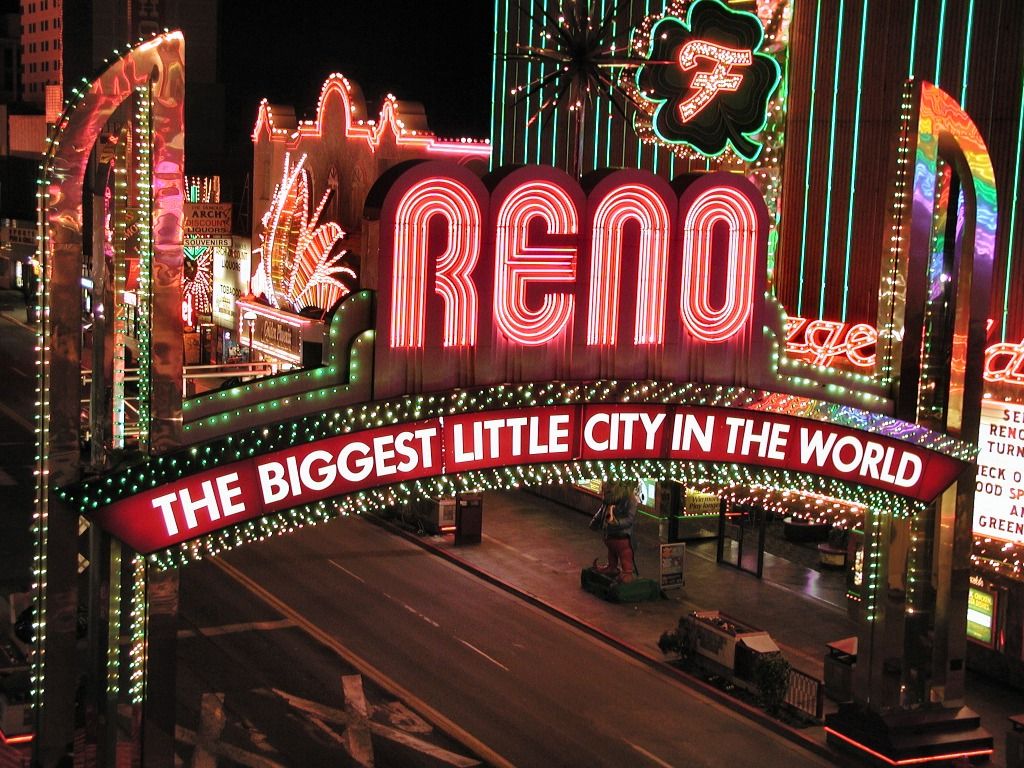 Eventually, despite having been evicted several times by the city’s maintenance crews, the pigeon problem persisted until one day there was an electrical short-circuit in the sign. The methane from the dung ignited; there was a minor explosion and a fire afterwards that damaged the sign beyond repair. The sign was removed and subsequently replaced by a newer Vegas-style beauty which electronically beckons visitors to the downtown district. While it’s a beautiful sight, the new sign doesn’t have the old sign’s charm and breaks the promise for a “little city” beyond. Recent visitors to the new Reno, if they knew the old Reno, will know what I mean.
Image left: New Reno sign – click to enlarge
As for pigeons? They’re just rats with wings.

 Saturday, during our visit to the cliffs at Point Vicente, we saw this flight of California Brown Pelicans soaring along the shoreline in the updrafts.