Arizona

Easter Lily Cactus Flower

I bought this cactus at Basha’s a few weeks ago because it looked nice. It has been living on the patio since then and last week a flower bud appeared. It opened last night and produced this beautiful flower seen in the images above and below.

We weren’t sure about the cactus variety, so I uploaded the photo just above to Grok AI which said it is likely an Easter Lily Cactus.

From Grok:

It looks like an Echinopsis species, probably something like Echinopsis oxygona (Easter Lily Cactus) or a close hybrid/relative. These are popular houseplants or garden cacti known for their large, showy white (sometimes pink-tinged) flowers that often bloom at night or in the evening and last about a day.

Key matching features from the photo:

  • The flower: Large, multi-petaled white bloom with a yellowish-green center and many slender petals radiating out.
  • The stem/peduncle: Long, fuzzy/hairy green tube supporting the flower (a hallmark of many Echinopsis blooms).
  • The body: Ribbed, globular-to-columnar green cactus with prominent areoles (the white spots where spines emerge).

Why this identification fits
Echinopsis (formerly often lumped with Trichocereus) are South American cacti common in nurseries and big-box stores like Bashas’ (a grocery chain in Arizona). They match the “night-blooming” or short-lived fragrant white flowers on woolly stems perfectly.

The flower was open this morning, and by late afternoon it had closed and the stem was slumped over. So, we will assume that this is indeed an Easter Lily Cactus. Click on either image to enlarge.

Goldfinches at the Thistle Seed Feeder

These three are “Lesser Goldfinches” (Spinus psaltria), also sometimes called “American Goldfinch” in older texts but distinct from the more widespread American Goldfinch (Spinus tristis). They’re a common sight Wickenburg, Arizona, especially around feeders stocked with Nyjer (thistle) seed, which is exactly what they prefer.

The lower finch is a male while the others above are both females, the latter having a more greenish yellow coloring than the yellow males. All three are enjoying the seed feeders. Click on the image to enlarge.

From SuperGrok:

Habitat & Range

They’re year-round residents across much of the southwestern U.S., including the Sonoran Desert regions of Arizona.
They thrive in open woodlands, riparian areas, weedy fields, and suburban gardens. They’re especially fond of native desert plants and feeders.

Behavior & Diet

Nyjer specialists: They love thistle/Nyjer seed. They’re also fond of sunflower seeds, but Nyjer feeders tend to draw them in flocks while deterring larger birds.
Social & vocal: They’re gregarious and chatty, with a distinctive high-pitched, tinkling call that sounds almost like “tsee-tsee” or a watery twitter. You’ll often hear them before you see them.
Breeding: In Arizona they can nest from spring through summer. They build small cup nests in trees/shrubs and raise 3–6 young per brood.

Fun Facts

They’re one of the few finches that can change their diet seasonally and will eat insects during breeding season for extra protein.
Their bright yellow plumage comes from carotenoid pigments in their diet (seeds and some insects).
Unlike some migratory birds, many Lesser Goldfinches in Arizona stay put year-round, making them reliable backyard visitors.

Image taken this morning during the before breakfast walk:

  • Camera: Canon EOS Rebel SL3
  • Shutter Speed: 1/400sec
  • Aperture: F6.3
  • ISO: 200
  • Lens: EF-S55-250mm f/4-5.6 IS STM at 250mm focal length

Saguaro Flower Close-Up

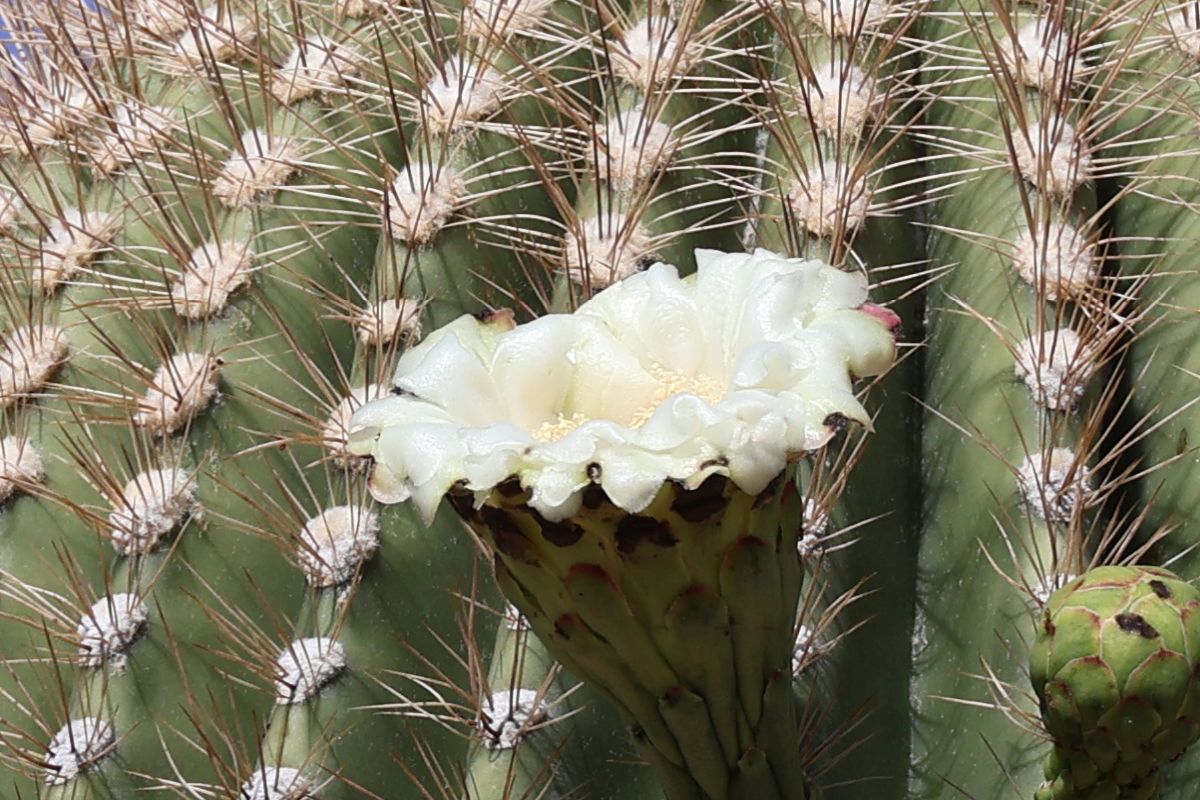
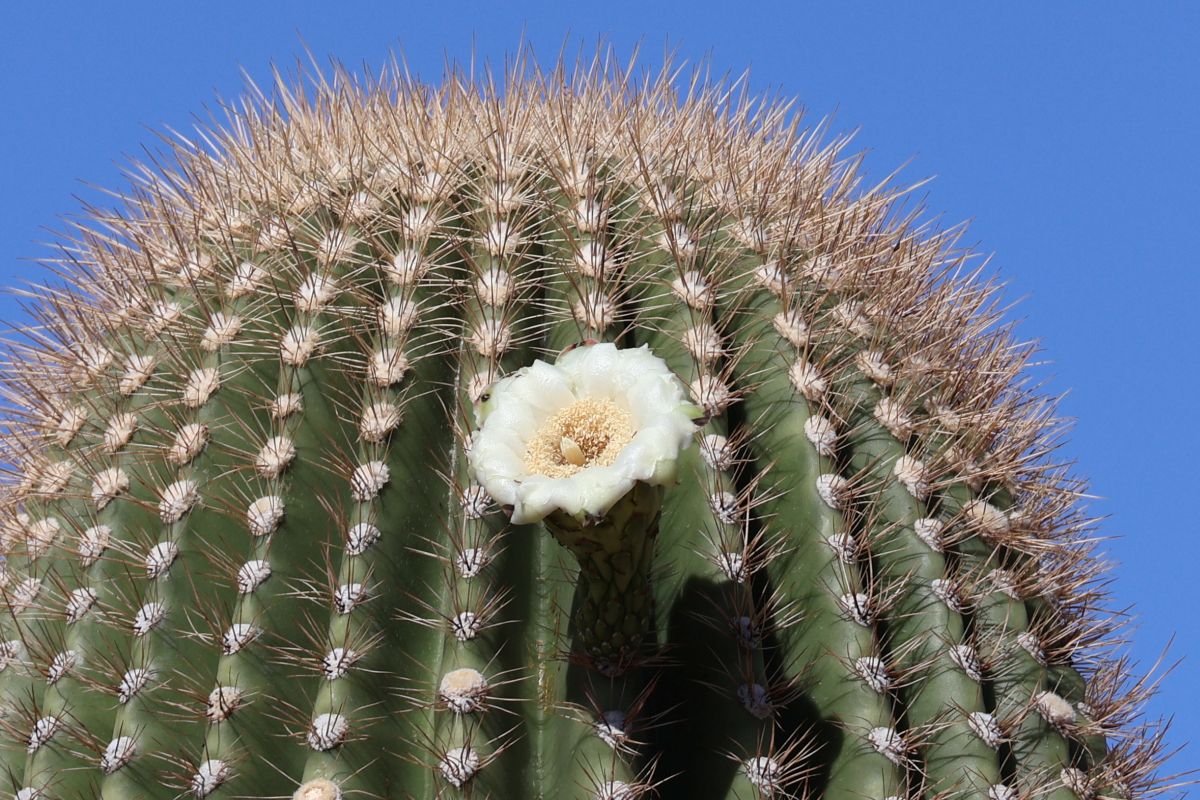
I mentioned in a previous post that it would only be a matter of time before one of the east-facing saguaro flowers opened up to reveal the interior of the bloom. We had been getting side views and not top views. Today. several of the buds were open and this east facing one was perfect for capturing the interior view of the flower. Click to view enlarged.

UPDATE 2026-06-06: More open flowers for your enjoyment. And for a couple of bees, too.

UPDATE 2026-06-07: Sunday’s Flower Pair.

Desert Oasis

This man made waterfall is on the golf course at Sun City Grand, near Surprise, Arizona. We pass through this part of the retirement community on our way to and from some appointments near here.

It looks so refreshing, especially on a day where the local high temperature was around 105°F. Click on the image to enlarge.

Female Northern Cardinal

Female Northern Cardinal (Cardinalis cardinalis)

Northern Cardinals are year-round residents in parts of Arizona, especially in desert riparian areas, mesquite thickets, and backyards with feeders (like the one in your photo). Wickenburg and surrounding areas in central Arizona fall within their range, though they’re more localized in the Southwest compared to the eastern U.S.

They are sometimes confused with the Pyrrhuloxia (a close relative sometimes called the “desert cardinal”), which is rarer in Arizona. You can tell them apart because female Northern Cardinals have a thicker, more reddish-orange bill and more blackish facial markings, while Pyrrhuloxias tend to have more gray tones and a different bill shape.

Above quotes from SUPER GROK – we have now subscribed and will be using the AI to enhance our postings here and on Capnbob & the Damsel.

  • Image (cropped) Northern Cardinal Female on Seed Feeder
  • Camera: Canon EOS R10
  • Program Mode: Normal Program, 1/400sec, ISO 250, F 7.1
  • Lens: RF-S55-210mm F5-7.1 IS STM @210mm

Image: Copyright(C) 2026, Click to view enlarged.

Saguaro Flower Season

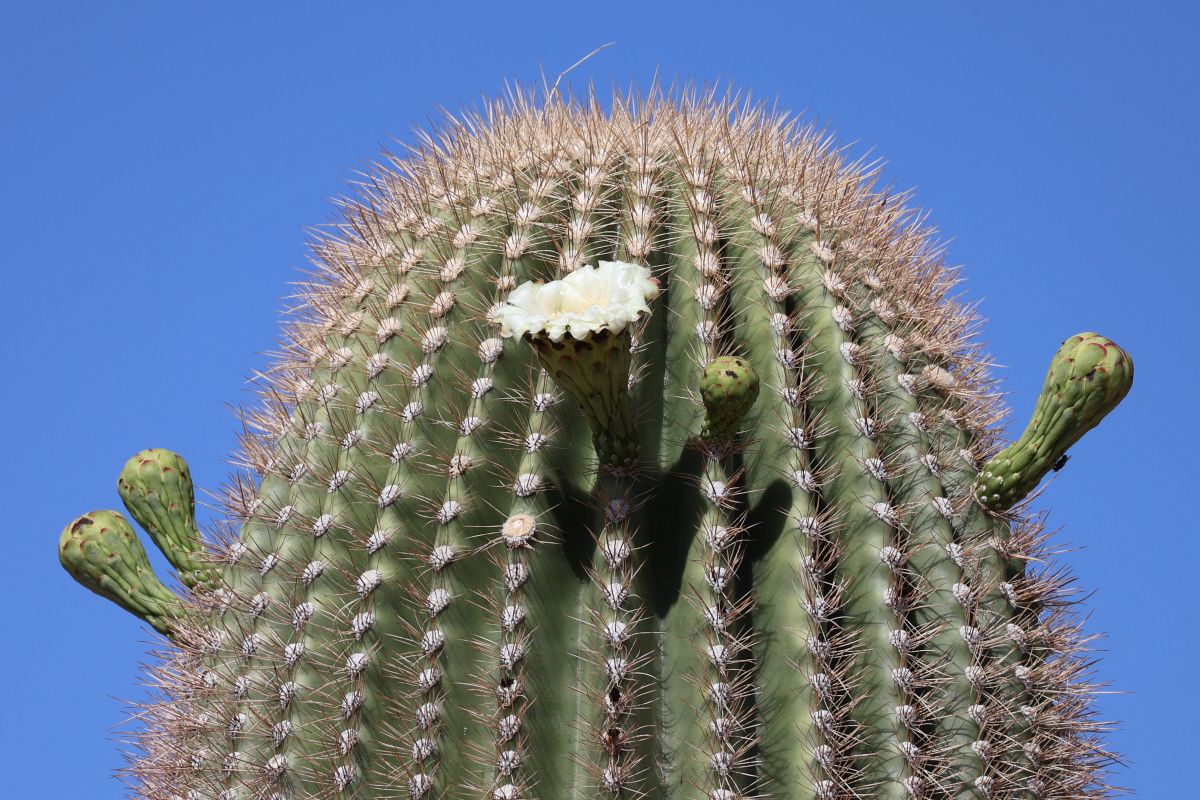
We have already had a couple buds open on the big Saguaro out front, but this nice example was open today on the smaller cactus across the yard from the big one. Since the cacti are so tall, and the flowers generally are facing upwards, it’s sort of hard to get a full top view of the flowers. Fortunately, some of the buds on the side of this cactus are facing east, and I might be able to get a face-on shot when some of them open. Stay tuned.

Click on the image to enlarge.