October 17, 2008 at 5:45 PM
· Filed under Critters, Culture
Posted by Verna
Halloween is two weeks from today. We’re going to be ready for all the little goblins, faeries, witches and what-have-you. What we’re not quite ready for, however, is little trick or treaters like Pug Vader here (ain’t he cute?). I suppose that I could run back to Bear’s doggie treat stockpile if Doggie Darth shows up. Maybe I’ll stock up on dog treats when I go shopping tomorrow.
I looked into some places that you can get one of these cute little costumes for that special pet in your life:
Spoiled Rotten Doggies
Halloween Costumes 4U
Permalink
October 16, 2008 at 4:56 PM
· Filed under Aviation, Nostalgia
Posted by Bob
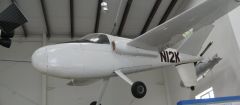
Last spring, we visited the Western Museum of Flight. Today, I was going through some of the photos from our visit and found this one of “Sierra Sue,” a 1953 demonstration aircraft.
Image: Sierra Sue (Click to enlarge)
Here’s what the Western Museum of Flight webpage says about this aircraft:
Built in 1953, the Sierra Sue was Northrop Company’s flying demonstrator for the Air Force’s AX close-support aircraft design competition in 1972. The AX Competition led to the manufacture of two prototypes, Northrop’s A-9A and Fairchild-Hiller’s A-10A. After an extensive flight test program, the Fairchild-Hiller design won the competition.
Designed and flown by Ron Beattie and Walt Fellers, the aircraft was manufactured by Acme’s (Sierradyne Inc.) Crawford and Keeney. It was used by Sierradyne in the ’60s to test and promote Northrop’s and Dr Werner Pfenninger’s boundary layer control concepts. The plane was never officially considered a Northrop aircraft.
| Manufacturer |
Acme Aircraft Co ( Sierradyne Inc) |
| Number Built |
1 |
| Wing Span |
20 feet 2 inches |
| Overall Length |
18 feet |
| Empty Weight |
590 pounds |
| Number of Seats |
2 |
| Power plant |
85 hp Continental C-85 pusher |
Permalink
October 15, 2008 at 7:46 PM
· Filed under Critters, Photography
Posted by Verna
I want to point out that this is not a telephoto image. These pelicans were no more than 10 to 12 feet (approximately 3 - 3.5 meters) from my lens when I took this photo from the overlook of the Palos Verdes L.A. County fishing access near Point Vicente. Just look at the fine way these magnificent aquatic birds manage to finesse the air currents with their wingtip feathers as they leisurely soar along the Palos Verdes Cliffs.
Click to enlarge (look at their wingtip feathers).

Permalink
October 14, 2008 at 6:20 PM
· Filed under Climate
Posted by Verna
It’s coming sooner than you think! I’m getting some of the Halloween gear out of the closet and deciding what I am going to set out as decorations. One of the things I brought out was this jack-o-lantern. I took this shot of it half in sunlight and half in shadow.

Permalink
October 13, 2008 at 6:16 PM
· Filed under Family
Posted by Bob
I got a little wanderlust when I saw this photo I took of the two of us on Saturday. We were just on Catalina Island last month and already we want to go back. The overnight windstorm blew most of the marine haze out of the area and left us with this clear view of the island. Click for bigger.

Permalink
October 12, 2008 at 7:56 PM
· Filed under Photography
Posted by Verna
Standing near the intersection of Crenshaw and Crest, you can see downtown Los Angeles when the haze gets blown out like it was yesterday. Click for the bigger picture.

Permalink
October 11, 2008 at 7:03 PM
· Filed under Critters, Photography
Posted by Verna
We took a drive to the south side of the Palos Verdes Peninsula today. We were prompted to do so because of the overnight onshore winds and the exceptional clear air. During the time we were out and about, I took over 250 pictures. One of those was this one of three California Brown Pelicans as they soared past the Palos Verdes Fishing Access toward the Coast Guard Station and Lighthouse at Point Vicente. Click to enlarge.

The Brown Pelican (Pelecanus occidentalis californicus) is the smallest of the eight species of pelican, although it is a large bird in nearly every other regard. It is 42-54 in (106-137 cm) in length, weighs from 6-12 lbs (2.75 to 5.5 kg) and has a wingspan from 6 to 8.2 ft. (1.83 to 2.5 m).
Permalink