January 24, 2008 at 11:05 AM
· Filed under Culture, Home & Garden, Photography
Posted by Verna
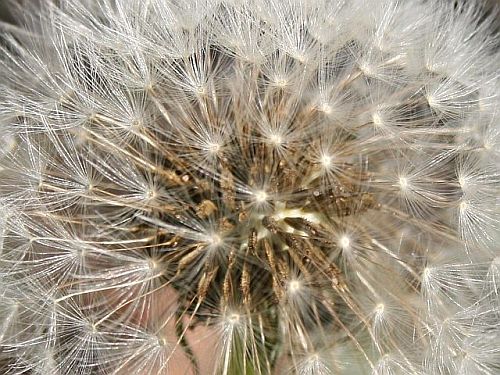
That’s the name we call our neighborhood gardener - a fellow that mows several lawns in the area. He spreads these with his equipment like Johnny Appleseed spread apple trees in Ohio.
This is a photo of a dandelion that I took at Wilderness Park last week.

Permalink
January 23, 2008 at 7:24 AM
· Filed under Photography, Vacation
Posted by Bob
You may have noticed the “Verna’s Water Zen” widget in the sidebar. This is the story behind that.
Verna likes the light patterns that water makes when sunlight dances through it. Whether in a swimming pool, in a river, in a marina channel or in a shallow harbor, it doesn’t matter, she likes the shimmering ripples.
Last September (2007), we spent our anniversary, as usual, on Catalina Island. We go to Avalon every year since that’s where we got married. While we were there, we took a lot of pictures and a few movies.
While we were waiting on the Green Pier for our glass-bottom boat tour. I leaned over the rail and captured this short sequence of the rippling water in the harbor. I used my little Canon A710 IS digital camera in AVI mode. I pointed the camera straight down and captured about ten seconds of video. When I showed the preview to Verna, she said it was relaxing like ‘Water Zen.’
So, when we got home, I converted the short video to Flash® and popped it in the sidebar as a remembrance to our time in Avalon and an opportunity to ‘gaze and relax.’
Permalink
January 22, 2008 at 8:22 AM
· Filed under Leisure, Photography
Posted by Verna
We don’t know how this isolated cove on the west side of Palos Verdes got it’s name, but it seems to be a favorite for scuba diving and snorkelers.
According to Franco’s Divers Maps, the cove has these highlights:
Divers enter Christmas Tree Cove via a steep dirt path at 2800 Paseo Del Mar. The underwater features mini walls and kelp, and usually the best visibility around the PV Peninsula. This is a popular game fish area, although it also features garibaldi, opaleye, treefish, and colorful bluebanded gobi. Invertebrates include: Sponges, anemones, keyhole limpets, Spanish shawls, chestnut cowries, and octopi. Good snorkeling throughout.
You can’t see any of that from the cliffs above, but you can get great views of the cove itself and the birds that inhabit the rocky coastal islets just offshore (you will need binoculars or a telephoto camera lens). Click on the image above for a 1024×768 pixel view.
Permalink
January 21, 2008 at 8:06 AM
· Filed under Home & Garden, Photography
Posted by Verna
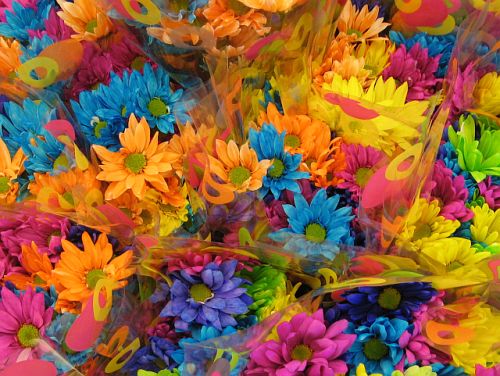
No, not as in death - as in color dye. Snapped the other day in the supermarket flower shop.

Permalink
January 20, 2008 at 6:48 PM
· Filed under Home & Garden, Photography
Posted by Verna
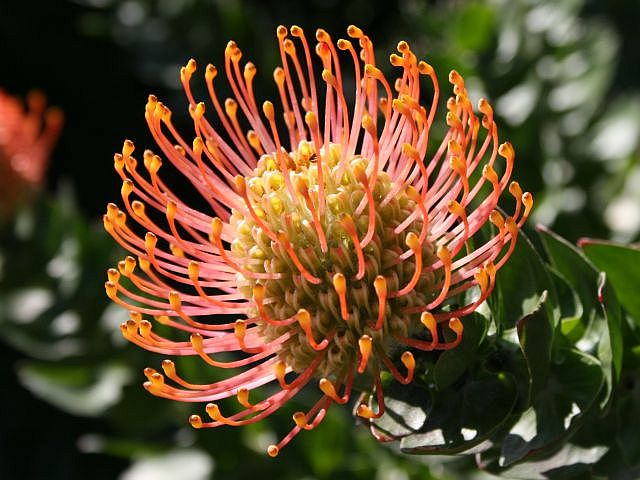
I’m not very familiar with this succulent but I think there is one of these at the South Coast Botanic Gardens. I’ll try and find out. The fist-sized flowers remind me of something that should be in the ocean. It’s very pretty though.

Permalink
January 19, 2008 at 7:16 PM
· Filed under Culture, Photography
Posted by Bob
Nestled in a few acres and not generally visible unless you’re in it, lies Redondo Beach’s Wilderness Park. A repose from the bustling city suburbs just a few yards away, this peaceful and idyllic park is the calm within the storm.
Within the park, you can feel isolated, yet walking up the path to the park’s east boundary, you can get panoramic views of the south bay skyline. There is a pond there too - today there were several ducks by the pond and one timid snowy egret that swooshed up to the top of a sycamore tree when we showed up. A screech owl flew out of it’s roost loudly vocalizing as it went along.
Hopkins Wilderness Park was developed in 1977 as a center for camping, nature study and conservation. The 11-acre site includes a Visitor Center used for nature-related classes and meetings; four ecological habitats: forest, meadows, streams, and ponds; amphitheater with firepit (150 capacity); three overnight campgrounds: Gumwood Camp, Pine Camp, and Sycamore Camp (30 person capacity each); Day Camp picnic site (30 person capacity); and public restrooms and support facilities.
No entrance fee is required for individuals or families who wish to visit the park.
The pond is shown below. As usual, you can click on most of our thumbnail pictures to see a larger view.

Permalink
January 18, 2008 at 7:33 AM
· Filed under Culture, Photography
Posted by Bob
From the on-line book description of “Old Torrance Olmsted Districts:”
The City of Torrance anchors Los Angeles County’s South Bay area and is known widely as a ‘headquarters city’ for corporate giants Exxon Mobil, Nissan, Honda, and others. Yet the city’s unique history often gets glossed over.
‘Downtown Torrance,’ also known as ‘Old Torrance’ and the ‘Olmsted Districts,’ was laid out in 1912 by Frederick Law Olmsted Jr., the influential urban-designer son of the ‘Father of Landscape Architecture,’ F. L. Olmsted Sr.
The town founder and patriarch, Jared Sidney Torrance, gave Olmsted Jr. the imperative to create a unique industrial city. The results are in the streets, buildings, and parks between Western Avenue and Crenshaw Boulevard, north of today’s Plaza Del Amo and south of Dominguez Way. Some structures in this district were designed by renowned architect Irving Gill, including the Southern Pacific Railroad Bridge and the Pacific Electric Railway depot.
Image above: Verna took this photo of a beautiful Craftsman Home in the Olmstead district. This is one of the many beautiful homes in the district. Click on the image to enlarge.
Permalink