My li’l S&W 442 .38 special on the American Flag – natural sunlight through the window over the stairs. Click on the image for a bigger view.


My li’l S&W 442 .38 special on the American Flag – natural sunlight through the window over the stairs. Click on the image for a bigger view.
Palos Verdes Estates is a city in Los Angeles County, California, USA on the Palos Verdes Peninsula. It was designed by the noted American landscape architect and planner Frederick Law Olmsted, Jr. – the same designer of the Olmsted Districts in Torrance.
 One of Palos Verdes Estates’ notable landmarks is Neptune Fountain, the City’s logo, in Malaga Cove Plaza. The elaborate two-thirds scale replica of a bronze statue and fountain erected in Bologna, Italy in 1563, was donated to Palos Verdes Estates in 1930 by the Palos Verdes Project. The statue is thought to have been over 100 years old before it was brought to the City and was obtained from a villa courtyard outside Venice.
In the image, King Neptune looks ready to thrust his trident at the paparazzi while holding out his hand as if to say “No more pictures, please.”
Credit Verna for this nice image. Click for big.
Neptune, atop the fountain, is surrounded by cherubs, aquatic denizens and mermaids who spout water from — well, any place one might expect liquid to flow.
While the Korean Bell is a beautiful attraction, you can’t ignore the view from the site.

Click on the image for the larger view.
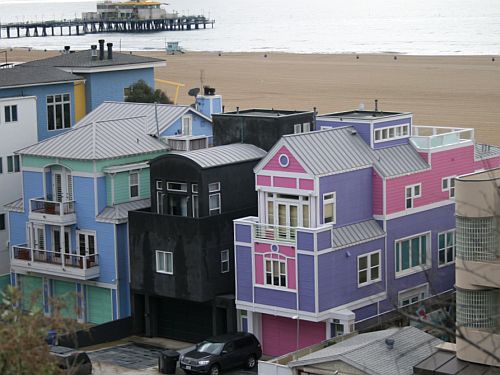
This is how they live on the beach in Santa Monica, CA. You would think that somebody could color coordinate a little better than this. Or, is this the new style for homes in that area?
Today was our grocery shopping day. Since we had some time to spare we took a ride down to San Pedro and around the Palos Verdes Peninsula. We took a lot of pictures – upwards of 250 or so. This one of the Korean Bell, was one of the nicer ones that Verna took.

That’s the name we call our neighborhood gardener – a fellow that mows several lawns in the area. He spreads these with his equipment like Johnny Appleseed spread apple trees in Ohio.
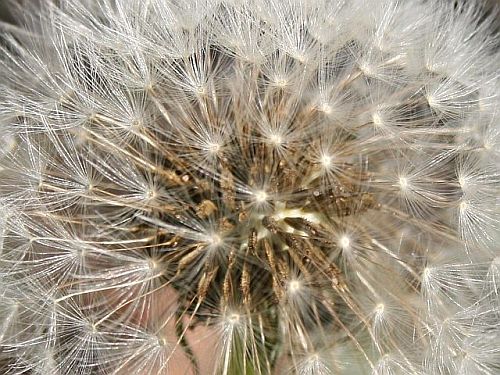
This is a photo of a dandelion that I took at Wilderness Park last week.